
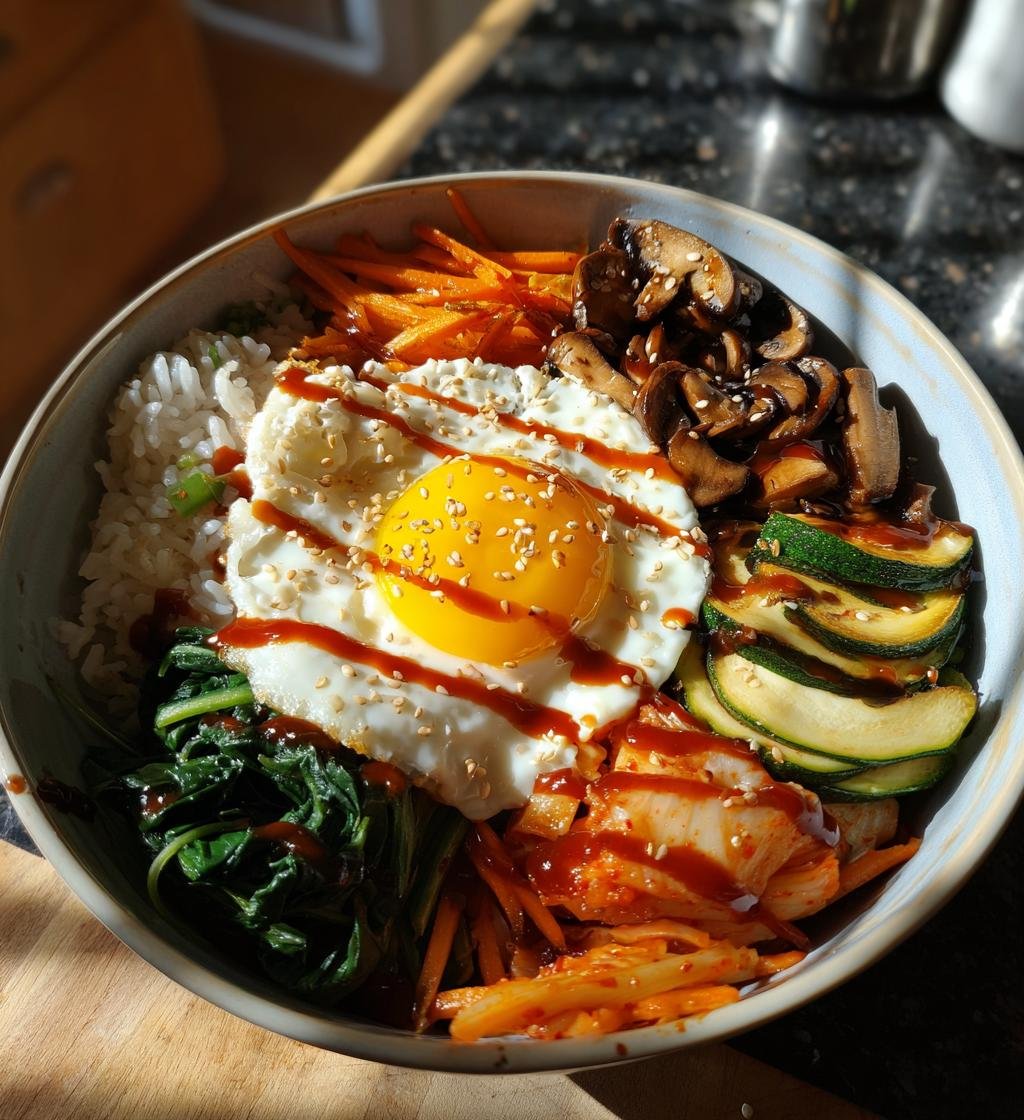
Oh my goodness, let me tell you about the joy of whipping up a Korean Bibimbap Bowl! This dish is like a beautiful canvas of colors and textures that dance together on your plate. Picture this: a steaming bed of fluffy rice topped with vibrant greens, crunchy veggies, and a sunny-side-up egg just waiting to be broken open. The first bite is an explosion of flavors—earthy spinach, sweet carrots, and tender shiitake mushrooms, all drizzled with that spicy gochujang sauce that makes your taste buds sing!
Every time I make this dish, I’m reminded of the first time I tried Bibimbap at a cozy little Korean restaurant. I fell in love with how each ingredient played its part, creating a harmonious blend that somehow felt comforting and exciting all at once. It’s a meal that feels special but is surprisingly simple to put together, making it perfect for weeknight dinners or when you want to impress friends. Plus, the best part? You can totally customize it! Add your favorite protein or seasonal veggies, and you’ve got a dish that’s uniquely yours. Trust me, once you dive into this bowl of deliciousness, you’ll be hooked!
Ingredients for Korean Bibimbap Bowl
Gathering the right ingredients is the first step to creating your perfect Korean Bibimbap Bowl. Here’s what you’ll need:
- 2 cups cooked rice: Any variety works, but I love using short-grain rice for its stickiness!
- 1 cup spinach: Blanched to keep that gorgeous green color and tender texture.
- 1 cup carrots: Julienne them for that lovely crunch and sweetness.
- 1 cup zucchini: Also julienned! It adds a nice lightness to the dish.
- 1 cup shiitake mushrooms: Sliced for an earthy flavor that pairs beautifully with the veggies.
- 1 cup bean sprouts: These add a delightful crunch and freshness.
- 2 eggs: Fried sunny-side up to crown your bowl with a deliciously runny yolk.
- 2 tablespoons gochujang: This spicy Korean chili paste is a must for that signature kick!
- 1 tablespoon sesame oil: It brings a nutty richness that ties everything together.
- 1 tablespoon soy sauce: For a touch of savory depth.
- 1 tablespoon sesame seeds: Toasted, if you can! They add a wonderful crunch and flavor.
Feel free to get creative with this list! You can add your choice of protein like beef, chicken, or tofu, and swap in any seasonal veggies you love. Just remember, the key is to keep it colorful and fresh!
How to Prepare Korean Bibimbap Bowl
Now that you’ve gathered all those vibrant ingredients, let’s dive into making your delicious Korean Bibimbap Bowl! Follow these steps, and I promise you’ll have a feast that’s not only beautiful but packed with flavor.
Prepare the Rice
Start with the rice because it forms the base of your bibimbap. If you haven’t cooked it yet, rinse 1 cup of short-grain rice under cold water until the water runs clear. This removes excess starch and helps achieve that lovely sticky texture. Cook it according to your rice cooker’s instructions or on the stovetop with a 1:1.2 water-to-rice ratio. Once it’s cooked, keep it warm by covering it with a cloth or placing it in a warm oven. This will make sure it’s fluffy and hot when you’re ready to assemble!
Blanch the Spinach
Next up is the spinach! Bring a pot of water to a boil and add a pinch of salt. Toss in the spinach for about 30 seconds, just long enough to wilt it. Remove it quickly and plunge it into an ice bath to stop the cooking process. This step keeps that gorgeous green color and a lovely tender bite. After it’s cooled, drain the spinach well and squeeze out any excess water. You want it to be flavorful, not soggy!
Sauté the Vegetables
Now let’s get those veggies sizzling! Heat a bit of sesame oil in a skillet over medium-high heat. Sauté the julienned carrots for about 2-3 minutes until they’re tender but still have a bit of crunch. Remove them from the pan, then add a splash more oil and do the same with the zucchini—just 2 minutes should do it! Finally, sauté the shiitake mushrooms for about 3-4 minutes until they’re soft and fragrant. Keeping them separate not only looks pretty but also lets each vegetable shine with its own flavor!
Fry the Eggs
Now for the star of the show—the eggs! In the same skillet, reduce the heat to medium-low and crack in your eggs. Fry them sunny-side up until the whites are set but the yolks are still runny—about 3 minutes. If you want the yolk extra creamy, cover the skillet with a lid for the last minute. Trust me, that runny yolk is going to mix beautifully with all those ingredients!
Assemble the Bowl
Time to bring it all together! Grab your warm rice and place it as the base in a bowl. Neatly arrange your blanched spinach, sautéed carrots, zucchini, mushrooms, and bean sprouts on top of the rice. If you’re adding a protein like grilled beef, chicken, or tofu, now’s the time to layer it in! Don’t be afraid to get creative with your presentation—it’s all about those vibrant colors!
Add the Sauce and Garnishes
Finally, let’s finish off this masterpiece! Drizzle a tablespoon of sesame oil and soy sauce over everything. Then, take your gochujang and either spoon it on top or serve it on the side for those who love an extra kick. Sprinkle toasted sesame seeds all over for that delightful crunch. And voilà! Your Korean Bibimbap Bowl is ready to be devoured!
Nutritional Information
Now that you’ve created this colorful and delicious Korean Bibimbap Bowl, let’s take a moment to appreciate its nutritional goodness! Here’s an estimated breakdown of what you’re enjoying in each bowl:
- Calories: 550
- Fat: 20g
- Saturated Fat: 3g
- Unsaturated Fat: 15g
- Trans Fat: 0g
- Cholesterol: 200mg
- Sodium: 800mg
- Carbohydrates: 85g
- Fiber: 5g
- Sugar: 3g
- Protein: 15g
This estimate gives you a good idea of how balanced your meal is! With a hearty serving of veggies, a good dose of protein, and those essential carbs from the rice, it’s a satisfying dish that fuels your day. Just remember, these values can vary based on your specific ingredients and portions, so feel free to adjust as you personalize your Bibimbap Bowl!
Why You’ll Love This Recipe
Let me share why this Korean Bibimbap Bowl has a special place in my heart (and stomach!). First off, it’s super quick to whip up! With just 35 minutes from start to finish, you’ve got a delicious, colorful meal ready in no time. Perfect for busy weeknights or when friends drop by unexpectedly!
Not only is it fast, but it’s also incredibly healthy! Packed with fresh vegetables, protein, and wholesome rice, this bowl is a powerhouse of nutrients. You’ve got your greens, crunch, and that satisfying warmth from the rice—all in one bowl. Plus, with the option to customize it, you can tailor it to meet your dietary needs or cravings. Want extra protein? Toss in some grilled chicken or tofu. Feeling adventurous? Experiment with different veggies or sauces!
The best part? It’s a feast for the eyes and the taste buds! The vibrant colors and textures make it a joy to prepare and an even bigger delight to eat. I mean, who wouldn’t want a bowl filled with such goodness? Trust me, you’ll be reaching for seconds!
Tips for Success
Creating the perfect Korean Bibimbap Bowl is all about those little details that elevate your dish to the next level. Here are my top tips to ensure your bibimbap is a showstopper!
Use Fresh, Quality Ingredients
When it comes to bibimbap, freshness is key! Opt for seasonal vegetables for the best flavor and texture. The brighter and crisper, the better! If you can, find a local market to pick up your produce—trust me, the taste difference is worth it!
Perfect Your Rice
If you want that classic sticky texture, short-grain rice is your best friend. Rinse it well before cooking to remove excess starch. Also, make sure to let it steam for a few minutes after cooking—this makes a world of difference in fluffiness!
Don’t Skimp on the Gochujang
This spicy chili paste is the soul of your bibimbap! Feel free to experiment with the amount based on your spice tolerance. If you’re feeling adventurous, try mixing in a bit of honey or sugar to balance out the heat—it’ll add a wonderful depth of flavor!
Layering is Key
When assembling your bowl, think about color and texture. Arrange your veggies artfully on top of the rice, and don’t just throw them in! This not only makes it visually stunning but also allows each ingredient to shine when you dig in.
Egg Perfection
For those glorious sunny-side-up eggs, low and slow is the name of the game! Cooking them on medium-low heat allows the whites to set perfectly while keeping that yolk gloriously runny. If you’re unsure, a lid over the pan for the last minute helps cook the tops without overdoing the yolk.
Make It Your Own
Don’t hesitate to customize your bibimbap! Add your favorite proteins like bulgogi, grilled chicken, or even crispy tofu for a vegetarian twist. Swap out any veggies you don’t love or throw in some kimchi for an extra kick. The magic of bibimbap is its versatility—make it your own!
With these tips in hand, you’re on your way to mastering a Korean Bibimbap Bowl that’s not only delicious but also full of personal flair. Happy cooking, and enjoy every bite!
Variations of Korean Bibimbap Bowl
The beauty of a Korean Bibimbap Bowl is its incredible versatility! You can mix and match ingredients to suit your mood, dietary preferences, or whatever you have on hand. Here are some fun ideas to switch things up and create your own unique bowl:
Protein Options
If you want to change up the protein, there are so many delicious options! Try adding grilled beef (bulgogi) for that sweet and savory flavor that pairs perfectly with the veggies. If you’re craving something lighter, grilled chicken is fantastic too. For a vegetarian option, crispy tofu or marinated tempeh can add a lovely texture and flavor. You could even do a mix of proteins for a delightful feast!
Seasonal Vegetables
Don’t feel limited to the ingredients I shared earlier! Use what’s in season or what you love. Bell peppers add a sweet crunch, while broccoli or cauliflower brings a nice bite when sautéed. If you’re feeling adventurous, try adding kohlrabi for an interesting twist or some radishes for a peppery kick. The more colorful your vegetables, the more beautiful your bowl will be!
Different Sauces
While gochujang is a classic, don’t hesitate to experiment with different sauces to elevate your bibimbap. A spicy sesame dressing can give it a whole new flavor profile. You might also enjoy a kimchi mayo for a creamy element that packs a punch. And for those who like a tangy kick, a splash of rice vinegar or ponzu sauce can brighten up the dish beautifully!
Try a Grain Base
If you want to swap out the rice, consider using quinoa or farro for a nutty flavor and added protein. You could even try cauliflower rice for a lighter, low-carb option. It’s all about finding what you enjoy most!
With these variations, you can create a Korean Bibimbap Bowl that’s uniquely yours every time! Get creative and have fun experimenting—your taste buds will thank you!
Serving Suggestions
Now that you’ve crafted your stunning Korean Bibimbap Bowl, let’s talk about what to serve alongside it to elevate your meal experience! Pairing the right sides can really complement the flavors and textures of your bibimbap.
Kimchi
No Korean meal is complete without kimchi! This spicy, tangy fermented cabbage adds an incredible depth of flavor and a delightful crunch. It’s the perfect contrast to the warmth of your bibimbap and brings that authentic Korean touch to your table. Plus, the probiotics in kimchi are great for gut health! Learn more about the health benefits of kimchi here.
Pickled Vegetables
If you’re looking for something a bit lighter, consider serving pickled vegetables on the side. Quick-pickled radishes, cucumbers, or carrots are refreshing and add a zingy flavor that cuts through the richness of the egg and sesame oil in your bibimbap. They’re also super easy to make!
Soup
A warm soup can be a comforting addition to your meal. A light miso soup or a Korean seaweed soup (miyeok-guk) pairs wonderfully with the bibimbap. The warmth of the soup complements the dish and adds an extra layer of nourishment without being too heavy.
Green Tea
To drink, I recommend a nice cup of green tea. Its subtle earthy notes balance beautifully with the bold flavors of your bibimbap. Plus, it’s refreshing and can help cleanse your palate between bites! Discover the health benefits of green tea here.
Fruit for Dessert
And let’s not forget dessert! After all those savory flavors, a light fruit-based dessert can be the perfect finish. Think fresh slices of melon, mango, or even a simple fruit salad. They bring a natural sweetness that rounds out the meal beautifully.
These serving suggestions will not only enhance your Korean Bibimbap Bowl but also create a delightful dining experience that’s colorful, flavorful, and oh-so-satisfying. Enjoy exploring these pairings!
Print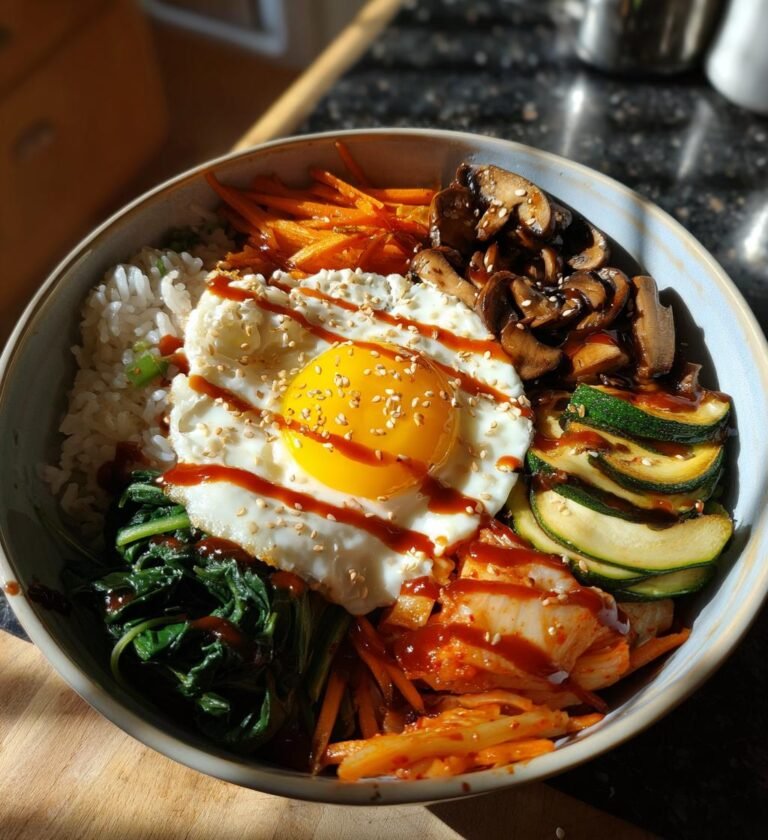
Korean Bibimbap Bowl: 7 Joyful Ways to Savor This Delight
A Korean Bibimbap Bowl is a flavorful and colorful dish that combines rice, vegetables, and protein topped with a fried egg and spicy sauce.
- Total Time: 35 minutes
- Yield: 2 servings 1x
Ingredients
- 2 cups cooked rice
- 1 cup spinach, blanched
- 1 cup carrots, julienned
- 1 cup zucchini, julienned
- 1 cup shiitake mushrooms, sliced
- 1 cup bean sprouts
- 2 eggs
- 2 tablespoons gochujang (Korean chili paste)
- 1 tablespoon sesame oil
- 1 tablespoon soy sauce
- 1 tablespoon sesame seeds
Instructions
- Prepare the rice and keep it warm.
- Blanch the spinach and drain well.
- Sauté carrots, zucchini, and mushrooms separately until tender.
- Fry the eggs sunny-side up.
- Assemble the bowl with rice as the base.
- Arrange vegetables and fried egg on top.
- Drizzle with sesame oil and soy sauce.
- Add gochujang and sprinkle sesame seeds before serving.
Notes
- You can add your choice of protein such as beef, chicken, or tofu.
- Adjust the amount of gochujang to suit your spice preference.
- Use any seasonal vegetables you prefer.
- Prep Time: 20 minutes
- Cook Time: 15 minutes
- Category: Main Dish
- Method: Stovetop
- Cuisine: Korean
- Diet: Vegetarian
Nutrition
- Serving Size: 1 bowl
- Calories: 550
- Sugar: 3g
- Sodium: 800mg
- Fat: 20g
- Saturated Fat: 3g
- Unsaturated Fat: 15g
- Trans Fat: 0g
- Carbohydrates: 85g
- Fiber: 5g
- Protein: 15g
- Cholesterol: 200mg
Keywords: Korean Bibimbap Bowl, Bibimbap, Korean cuisine, healthy bowl