
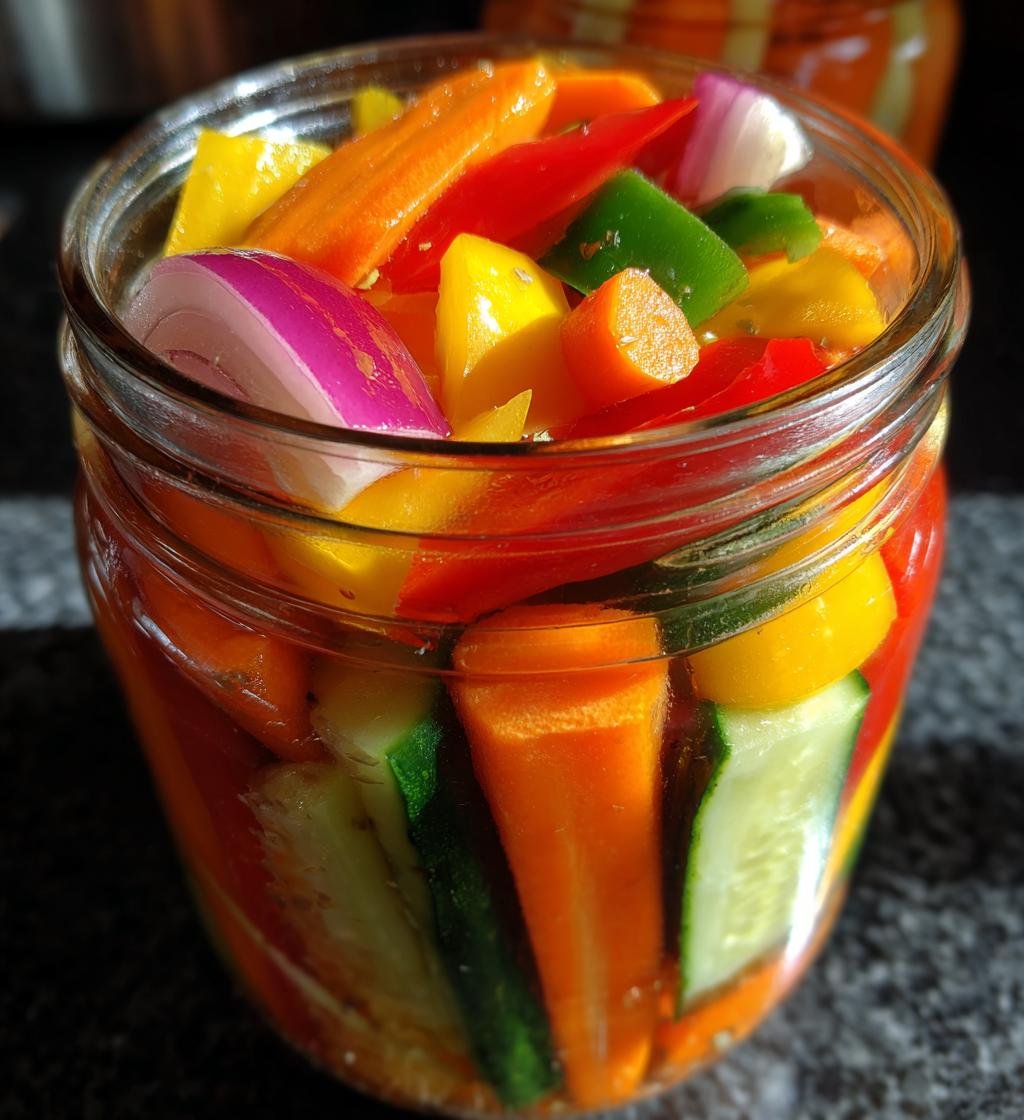
Is there anything more satisfying than a jar of homemade pickled vegetables sitting in your fridge, ready to elevate any meal? I absolutely adore pickling vegetables, especially with this classic recipe that brings out vibrant flavors while preserving their freshness. Whenever summer rolls around, I find myself diving into this delightful process, and honestly, it feels like a little magic. I remember the first time I tried pickling with my grandma; the kitchen was filled with the tangy aroma of vinegar and spices, and I could hardly wait to taste the results. This recipe is my go-to for pickled vegetables in July — classic and oh-so-simple, it transforms everyday veggies into something extraordinary. Trust me, once you try it, you’ll be hooked on the crunch and tang that come with every bite!
Ingredients List
To create the best pickled vegetables July — classic recipe, you’ll need a selection of fresh, crunchy veggies and a few pantry staples. Here’s what you’ll need:
- 2 cups of carrots, sliced into thin rounds or sticks
- 2 cups of cucumbers, sliced into rounds or spears
- 1 cup of bell peppers, sliced into strips (any color you like!)
- 1 cup of red onion, sliced thinly
- 2 cups of distilled white vinegar
- 1 cup of water
- 1/4 cup of sugar
- 2 tablespoons of salt
- 1 tablespoon of mustard seeds
- 1 teaspoon of black peppercorns
Using fresh vegetables is key to getting that perfect crunch and vibrant flavor. You can mix and match your favorites, but I always find that this combo works wonders. Get ready to dive into the world of pickling!
How to Prepare Pickled Vegetables July — Classic
Preparing pickled vegetables is a simple yet rewarding process that anyone can master. Here’s how I do it step-by-step:
- First, start by washing all your vegetables thoroughly under cold water. This step is crucial for removing any dirt or pesticides. Once clean, slice the vegetables into your desired shapes. I typically slice the carrots into thin rounds, the cucumbers into spears, and the bell peppers and red onion into strips. This variety not only looks gorgeous but also provides a delightful crunch.
- Next, grab a medium saucepan and combine the distilled white vinegar, water, sugar, and salt. Stir it all together until the sugar and salt dissolve completely. Then, bring this mixture to a gentle boil over medium heat. It’s important to keep an eye on it, as you don’t want it boiling too aggressively.
- Once it reaches a boil, add the mustard seeds and black peppercorns, giving it a quick stir to incorporate. This is when the magic begins, and your kitchen will start to smell amazing!
- Now, it’s time to pack your sterilized jars. Make sure they’re clean to avoid any unwanted bacteria. Layer the sliced vegetables into the jars, packing them tightly but not so much that they get squished.
- Carefully pour the hot vinegar mixture over the vegetables, ensuring they are completely submerged. This is key for proper pickling. Use a spoon to push down any floating veggies if you need to.
- Seal the jars tightly with lids and allow them to cool at room temperature. Once they’re cool, pop them in the refrigerator. It’s best to wait at least 24 hours before enjoying them, as this gives the flavors time to meld beautifully.
And there you have it! A delightful way to preserve your veggies, enhance their flavors, and enjoy that crunchy goodness! Happy pickling!
How to Prepare Pickled Vegetables July — Classic
Preparing pickled vegetables is a simple yet rewarding process that anyone can master. Here’s how I do it step-by-step:
- First, start by washing all your vegetables thoroughly under cold water. This step is crucial for removing any dirt or pesticides. Once clean, slice the vegetables into your desired shapes. I typically slice the carrots into thin rounds, the cucumbers into spears, and the bell peppers and red onion into strips. This variety not only looks gorgeous but also provides a delightful crunch.
- Next, grab a medium saucepan and combine the distilled white vinegar, water, sugar, and salt in it. Stir it all together until the sugar and salt dissolve completely. Then, bring this mixture to a gentle boil over medium heat. It’s important to keep an eye on it, as you don’t want it boiling too aggressively.
- Once it reaches a boil, add the mustard seeds and black peppercorns, giving it a quick stir to incorporate. This is when the magic begins, and your kitchen will start to smell amazing!
- Now, it’s time to pack your sterilized jars. Make sure they’re clean to avoid any unwanted bacteria. Layer the sliced vegetables into the jars, packing them tightly but not so much that they get squished. You want them snug but still able to maintain their crunch.
- Carefully pour the hot vinegar mixture over the vegetables, ensuring they are completely submerged. This is key for proper pickling. Use a spoon to push down any floating veggies if you need to, making sure every piece is covered in that tangy goodness.
- Seal the jars tightly with lids and allow them to cool at room temperature. Once they’re cool, pop them in the refrigerator. It’s best to wait at least 24 hours before enjoying them, as this gives the flavors time to meld beautifully.
And there you have it! A delightful way to preserve your veggies, enhance their flavors, and enjoy that crunchy goodness! Happy pickling!
Why You’ll Love This Recipe
This classic pickled vegetables recipe is not just easy to make; it’s bursting with benefits that will have you reaching for those jars all summer long. Here’s why you’ll love it:
- Simple Preparation: With just a few steps, you’ll have delicious pickles ready to enjoy.
- Flavor Explosion: The tangy vinegar, sugar, and spices come together to create a burst of flavor that elevates any dish.
- Freshness Preserved: You can enjoy the taste of summer veggies long after the harvest season ends.
- Customizable: Feel free to experiment with different veggies and spices to suit your taste!
- Healthy Snack: These pickles are low in calories and a great way to add crunch to your meals.
Tips for Success
To ensure your pickled vegetables turn out perfectly every time, here are some tried-and-true tips that I’ve gathered over the years:
- Fresh Ingredients: Always use the freshest vegetables you can find. Crisp carrots, cucumbers, and peppers make all the difference in texture and flavor.
- Customize Your Spices: Don’t hesitate to get creative! Try adding dill, garlic, or even a pinch of red pepper flakes for an extra kick.
- Proper Sterilization: Make sure your jars are thoroughly sterilized before packing them with veggies. You can do this by boiling them in water for 10 minutes.
- Storage Tips: Store your pickles in the refrigerator and consume them within two months for the best taste. The flavors will continue to develop over time!
- Experiment with Timing: If you prefer a stronger pickling flavor, let them sit longer than 24 hours before digging in!
With these tips in mind, you’ll be well on your way to creating delicious, tangy pickled vegetables that everyone will love!
Variations
One of the best parts about this classic pickled vegetables recipe is how easily you can customize it to suit your taste! Here are some fun variations to consider:
- Add Fresh Herbs: Toss in sprigs of dill, thyme, or even basil for an aromatic twist.
- Spice It Up: For a little heat, include sliced jalapeños or a pinch of red pepper flakes.
- Mix Up the Veggies: Try using radishes, green beans, or cauliflower for a colorful and crunchy mix.
- Experiment with Sweetness: Swap white sugar for honey or maple syrup for a different flavor profile.
- Infuse with Garlic: Adding a couple of smashed garlic cloves can elevate the savory notes beautifully.
Feel free to get creative with these variations and discover your perfect pickled veggies!
Nutritional Information Section
When it comes to pickled vegetables, they’re not just delicious—they’re also quite healthy! Here’s a breakdown of the estimated nutritional information per serving (1 jar):
- Calories: 50
- Fat: 0g
- Saturated Fat: 0g
- Trans Fat: 0g
- Carbohydrates: 12g
- Sugar: 8g
- Fiber: 2g
- Protein: 1g
- Sodium: 600mg
- Cholesterol: 0mg
Keep in mind that these values can vary based on the specific ingredients and brands you use, but overall, you can enjoy these pickled veggies guilt-free! They’re a fantastic way to add flavor and crunch to your meals without the extra calories.
FAQ Section
Got questions about pickling vegetables? Don’t worry, I’ve got you covered! Here are some common queries I hear, along with my answers:
- How long do pickled vegetables last in the fridge? Generally, your pickled vegetables will stay fresh for up to two months when stored properly in the refrigerator. Just make sure the jars are sealed tightly!
- Can I use other vegetables for pickling? Absolutely! You can experiment with a variety of vegetables like radishes, green beans, or even cauliflower. Just keep in mind that denser vegetables may need a bit longer to pickle.
- What’s the best way to store pickled vegetables? Always store them in a cool, dark place in your refrigerator. Ensure the jars are airtight to keep the flavors intact.
- Can I reduce the sugar in this recipe? Yes, you can adjust the sugar to your liking! Just know that it may alter the overall flavor and balance of the pickles.
- Do I need to sterilize jars for pickling? Yes! Sterilizing your jars is crucial to prevent any unwanted bacteria that could spoil your pickles. Boiling them for 10 minutes does the trick!
Storage & Reheating Instructions
Storing your pickled vegetables is super easy! Once you’ve sealed the jars, pop them in the refrigerator. They’ll stay fresh for up to two months, but trust me, they’ll probably be gone long before then! Just make sure the jars are tightly sealed to keep the flavors vibrant.
As for reheating, pickled vegetables are best enjoyed cold or at room temperature, so there’s really no need to heat them up. If you do want to warm them slightly for a dish, just give them a quick toss in a pan over low heat for a minute or two. Enjoy your tangy, crunchy goodness!
Print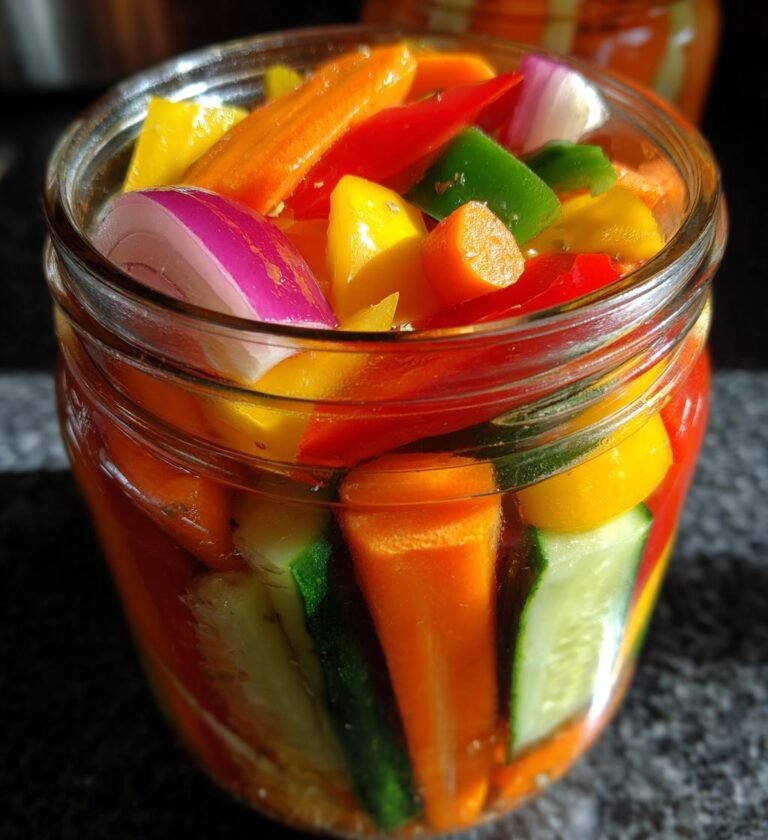
Pickled Vegetables July — Classic Recipe to Savor Forever
A classic recipe for pickled vegetables that enhances flavor and preserves freshness.
- Total Time: 40 minutes
- Yield: 4 pint jars 1x
Ingredients
- 2 cups of carrots, sliced
- 2 cups of cucumbers, sliced
- 1 cup of bell peppers, sliced
- 1 cup of red onion, sliced
- 2 cups of distilled white vinegar
- 1 cup of water
- 1/4 cup of sugar
- 2 tablespoons of salt
- 1 tablespoon of mustard seeds
- 1 teaspoon of black peppercorns
Instructions
- Prepare the vegetables by slicing them into desired shapes.
- In a saucepan, combine vinegar, water, sugar, and salt.
- Bring the mixture to a boil, stirring until sugar and salt dissolve.
- Add mustard seeds and black peppercorns to the mixture.
- Pack the sliced vegetables into sterilized jars.
- Pour the hot vinegar mixture over the vegetables, ensuring they are fully submerged.
- Seal the jars and let them cool to room temperature.
- Refrigerate the jars for at least 24 hours before serving.
Notes
- Use fresh, crisp vegetables for the best texture.
- Feel free to customize with additional spices.
- Store in the refrigerator for up to 2 months.
- Prep Time: 30 minutes
- Cook Time: 10 minutes
- Category: Condiment
- Method: Pickling
- Cuisine: Global
- Diet: Vegetarian
Nutrition
- Serving Size: 1 jar
- Calories: 50
- Sugar: 8g
- Sodium: 600mg
- Fat: 0g
- Saturated Fat: 0g
- Unsaturated Fat: 0g
- Trans Fat: 0g
- Carbohydrates: 12g
- Fiber: 2g
- Protein: 1g
- Cholesterol: 0mg
Keywords: Pickled Vegetables, Pickling, Classic Recipe